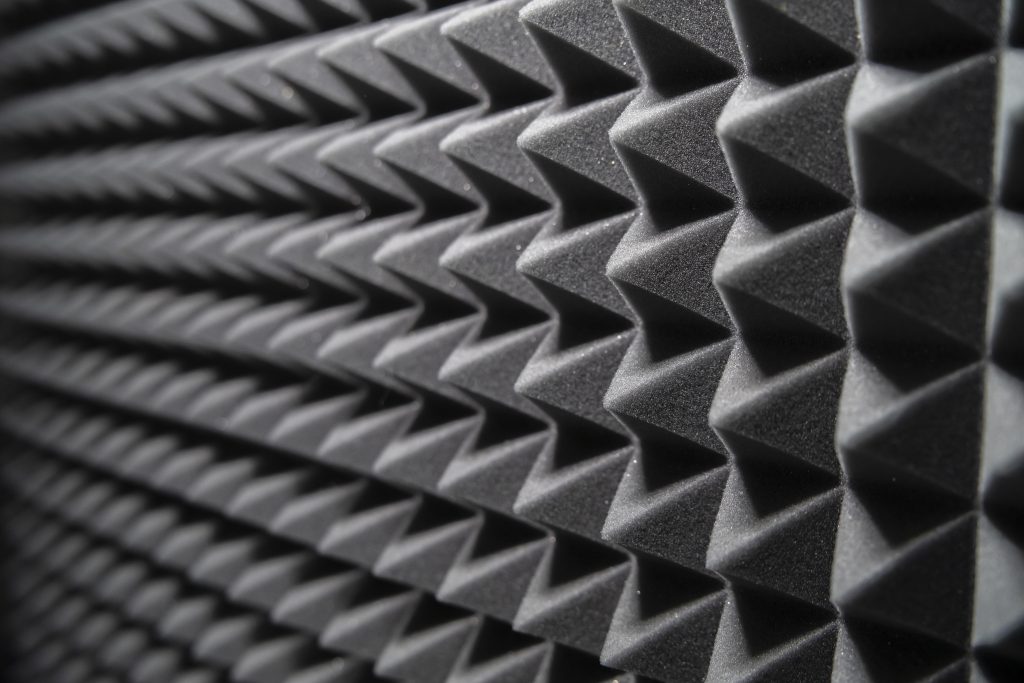
Acoustics Foam
Acoustic Foam (Sound Absorbing Foam for Noise Control)
Acoustic Foam is a highly effective sound-absorbing material used to improve acoustic performance in various environments. In addition, it helps reduce echo, control reverberation, and enhance overall sound clarity in both commercial and residential spaces. Available in different colors, patterns, thicknesses, and NRC (Noise Reduction Coefficient) ratings, it offers flexible solutions for different noise control needs.
Benefits of Acoustic Foam for Soundproofing and Echo Reduction
One of the main benefits is its ability to absorb unwanted sound reflections. Therefore, it significantly reduces echo and reverberation in enclosed spaces. This makes it especially useful in recording studios, broadcast rooms, home theatres, and podcasting environments.
In addition, it improves speech clarity by controlling background noise and preventing sound distortion. As a result, it creates a more balanced and professional acoustic environment for audio production and communication.
Why Acoustic Foam is Important for Acoustic Treatment
Acoustic Foam plays a key role in acoustic treatment by improving sound quality without requiring major structural changes. Furthermore, it is lightweight, easy to install, and adaptable to different wall and ceiling surfaces.
Applications Across Various Industries
Acoustic Foam in Different Facilities
Acoustic Foam is used to reduce noise, control echo, and improve sound quality in various spaces. In addition, it creates more comfortable acoustic environments.
Factories
In factories, it reduces machinery noise. Therefore, it improves safety and comfort.
Recording Studios
In studios, it absorbs sound. As a result, audio clarity is improved.
Auditoriums
In auditoriums, it improves sound distribution. In addition, it ensures clear audio.
Churches
In churches, it controls sound levels. Therefore, speech and music are clearer.
Classrooms
In classrooms, it reduces background noise. As a result, it improves focus.
Variety of Options
When selecting acoustic foam, it’s essential to consider the different colors, patterns, and thicknesses available. This variety allows for customisation based on aesthetic preferences and specific sound absorption needs. The NRC ratings provide insight into the foam’s effectiveness, helping users choose the right product for their sound management requirements.
Conclusion
In summary, acoustic foam is crucial for anyone looking to improve sound quality and reduce noise in various settings. With its diverse options and applications, it offers effective solutions for both commercial and residential spaces. Whether you’re creating a peaceful classroom, an optimal recording studio, or a comfortable workplace, investing in this material is a step toward achieving your sound management goals.